OR: Leaves of Ads? Ads of Grass? I got nothin'...
Aside from the fourth of July, nothing makes me feel more happy to be American than the first Sunday after Labor Day; the opening day of the NFL season (I refuse to admit that Thursday is now the opening day) when I typically spend the entire day watching (and reveling in) football. It was during one of these games when I saw the “America” Whitman ad for the first time, and I was floored at how awesome it was. I remember thinking at the time, “wow. This is a great ad, but I don’t think very many people are going to appreciate it.” The second “O Pioneers” ad is great too, but I’d like to focus on the “America” ad 1) because it uses the actual wax recording of Whitman reading his poem, and 2) because I saw it first and it elicited my initial “wow” response.
Levi’s ran the ad in order to cement itself as the quintessential American product, and by running it during the opening weekend of football, it also wanted cement itself as the quintessential product Americans are proud of. Companies like McDonald’s and Chevrolet may evoke “Americanism” more than Levi’s, but the quality of those companies’ products doesn’t necessarily evoke pride anymore. Levi’s associated itself with Whitman’s poetry (and by using the original wax recording, Whitman himself) and football, thus making it appeal to America’s sense of pride. In doing so, it makes Levi’s jeans seem traditional yet youthful, stylish yet functional, fashionable yet accessible. I have to say, as far as I’m concerned, no company has had a more effective ad campaign than Levi’s, with Nike and Old Spice tied for second.
Aside from the ad’s effectiveness, however, I’d like to point out where the imagery in the ad echoes the Whitman’s poetry in Leaves of Grass. First, we have the subjects in the commercial all comfortable with their bodies. As Whitman says in lines 49 and 50 of Leaves of Grass, “[w]elcome is every organ and attribute of me, and of every man hearty and clean. Not an inch nor a particle of an inch is vile, and none shall be less familiar than the rest.” The people in the ad running, flipping, and flexing, seem to revel in their own bodies, exuding not only vitality, but a sense of comfortableness in their bodies and skin.
Second, we have this unifying sense that the poem/ad speaks to everyone. In the “America” ad, as Whitman says “centre of equal daughters, equal sons, all” the ad shows a young black girl in the inner city juxtaposed with an embattled CEO. The ad takes two Americans, seemingly on opposite ends of the racial/cultural/socioeconomic/age spectrum, and relates them to each other through Whitman’s words and the mood each is facing. This has the similar effect to Whitman’s “cataloging” from lines 257 to 346 of Leaves of Grass, as he lists all types of Americans in order to emphasize a uniting quality of the American spirit.
Finally, we have imagery of grass itself. The ad shows a young girl picking her way through waist high grass, two boys playing in grass obscured from view of two older men sitting in chairs, more boys running and flipping through tall grass, and a landscape pan over tall fields. These multiple images conjure Whitman’s parallel of grass and hope, as he writes in Leaves of Grass, “…What is the grass? […] I guess it must be the flag of my disposition, out of hopeful green stuff woven” (90-92). The director of the ad arguably encompasses the spirit of Whitman completely, and does so in only one minute.
A lot of people have commented on how the ads cheapen Whitman’s poetry and the American spirit, but I am not in that camp. I really have no problem with advertisements using artistic means of playing on a person’s ethos, pathos, or logos to convey a corporate image or to imply a feeling of happiness to be attained through purchasing a product or service. Consumerism, with all of its faults and qualities, is a fundamental part of American society. I feel it is a little presumptuous to label something as negative simply because it promotes capitalism.
I do, however, argue with the point made in the assigned blog reading which asserts that “[a]dvertising has taken up what Whitman thought was the poet’s job” (McCracken). While consumerism is a huge part of America, there is still an element of “untainted” spirit of the poet in American culture. I would argue that musicians, not advertising, have taken up the Whitman mantle. People like Bob Dylan, Paul Simon, Bruce Springsteen, Kurt Cobain, and Tupac Shakur are the icons of American spirit, and while Cap’n Crunch and Mr. Clean may be just as famous as these musicians, the influence of certain songwriters is more of a driving force of cultural change than advertising. While advertising may be inherently American, music is where we see the inherent American spirit that Americans can be proud of. Advertising agencies are cultural mirrors, not, as McCracken claims, “the active inventors of American culture.”
Saturday, March 6, 2010

Friday, February 19, 2010
Ruskin, Church, and Cotopaxi
OR: Tone 101: How to Create Mood Lighting
.jpg)
Cotopaxi - Frederic Edwin Church
I scoured the internet for a usable picture of Mt. Rainier, but I didn't like any of the ones I found. The consolation prize, I suppose, is this pretty badass painting of an erupting volcano called Cotopaxi, which is somewhere in Ecuador.
What struck me most in relating the reading to this particular painting was Ruskin's description of "tone." A lot of Ruskin's description of art I either don't agree with or is over my head, but I did like how he described tone in relation to landscapes, and how tone has two aspects:
[F]irst, the exact relief and relation of objects against and to each other in substance and darkness, as they are nearer or more distant, and the perfect relation of the shades of all of them to the chief light of the picture, whether that be sky, water, or anything else. Secondly, the exact relation of the colors to the shadows to the colors of the lights, [...] so that the whole of the picture (or, where several tones are united, those parts of it which are under each,) may be felt to be in one climate, under one kind of light, and in one kind of atmosphere; this being chiefly dependent on that peculiar and inexplicable quality of each color laid on, which makes the eye feel both what is the actual color of the object represented, and that it is raised to its apparent pitch by illumination. (Ruskin II.I.1, page 141)I don't nearly have the expertise in art that I would like, but what I think it boils down to is that the work should have a consistent and realistic relationship between its light source and the objects within, and that a gifted artist will be able to "illuminate" certain colors and shapes using those light sources. The better a work's lighting, the higher the work's quality of tone.
Why I find this description of tone particularly useful in analysis of Cotopaxi, is because this work has multiple light sources working harmoniously to form a rich picture, and the bright colors seem to pop off of the canvas (or in this case, out of the monitor) brilliantly. According to my count, the work has one main light source, the sun, but because of the ash coming out of the volcano the sun doesn't dominate the lighting of the painting and allows for three more secondary light sources: the lake directly below the sun, the waterfall at the bottom slightly toward the left, and the unobscured patch of sky in the top left sixth.
These light sources somewhat distort the actual colors of the painting as to what we would typically see. The trees in the bottom left corner are not green, but are multiple shades of black and red; the cliff faces aren't sandy beige, but look like glowing coal embers. The flat lake looks more like a pool of lava than a cool pond. The ash coming out of the volcano tints the sun, and therefore tints everything else.
However, the sky to the left of the volcano has not been obstructed by ash, and is the typical light blue. This gives the painting some depth and a touch of realism that Ruskin covets so greatly. Because of the patch of blue sky, the viewer is reminded that the distorted color scheme is due to natural forces, not just some hellish vision of the artist. Also, the waterfall reflects white and blue, in part due to the sky as a light source, but also because rapidly moving water naturally reflects all spectrums of light.
Church understands Ruskin's principles of tone: he wanted to paint Cotopaxi in passionate tones of red and black, but in order to do this he had to invent a natural way to distort the color scheme (the volcano wasn't actually erupting, and the waterfall wasn't actually there). The work is still part of the artist's imagination, but it fits the laws of nature. Therefore, Church's work gets the Ruskin stamp of approval.
Thursday, February 18, 2010
The Tempestuous Lady Lilith
OR: A smorgasbord of…desire?

deceive,
And her enchanted hair was the first gold.
And still she sits, young while the earth is old,
And, subtly of herself contemplative,
Draws men to watch the bright web she can weave,
Till heart and body and life are in its hold.
The rose and poppy are her flowers; for where
Is he not found, O Lilith, whom shed scent 10
And soft-shed kisses and soft sleep shall snare?
Lo! as that youth's eyes burned at thine, so went
Thy spell through him, and left his straight neck bent
And round his heart one strangling golden hair.
Rossetti’s painting of a contemporary (Victorian) Lilith, coupled with a marvelous poem that also re-imagines Lilith, struck me as a very thoughtful and beautiful combination of a several complex artistic areas. The poem is based off of the medieval tale of Lilith, the “real” first woman in Genesis, who was made from the same clay as Adam but run off from Eden because she was too headstrong*. So here, Rossetti bases a painting off of a poem that is based off of a fable that is based off of the Old Testament. Ambitious to say the least. Not to mention that in the painting and poem he reconciles Medieval, Romantic, and Victorian principles and melds them together quite nicely. The result is a very complex and intriguing “double work,” but it gives scholars like us a headache trying to decipher all of the influences that went into said work.
The interplay between the poem and painting draws out a theme of decadence that transcends time periods and artistic movements, however. Lilith is staring at herself in a mirror while combing her hair, the personification of Narcissism, “subtly of herself contemplative” (7). The painting is littered with roses and poppies, which are blatant symbols of lust (the red rose, the flower of love) and sensual pleasure (poppies, from which opium is made). And helpfully, the poem states what the painting implies: that Lilith is a tempter and trapper of men. Her tempestuousness is best described in lines eight and nine: “[She] [d]raws men to watch the bright web she can weave, / Till heart and body and life are in its hold.”
What connects the double work to its Victorian audience is the portrayal of Lilith’s hair. As Rossetti remarks that “her enchanted hair was the first gold,” (5) he is tying greed into Lilith’s desirous but evil qualities. The painting emphasizes this, as Lilith’s hair is beautifully detailed (more so than her actual body) and is the center of the action. Hair, as a metaphor for gold, expresses Rossetti’s concern with Victorian materialism. By coupling lustfulness and materialism, he is examining the fundamental theme of unchecked desire, and by evoking the “first woman,” he is reiterating that this desire is as old as the human race. The final two lines seem to be a warning about the consequences of following such desires: “so went / [Lilith’s] spell through him, and left his straight neck bent / And round his heart one strangling golden hair.” Rossetti is simultaneously warning against and admiring the power desire wields over men.
FOOTNOTE: * I had never heard of this interpretation of Genesis, but apparently it exists because of two separate mentions of the creation of woman in the Old Testament: 1:27 “So God created man in his own image, in the image of God created he him; male and female created he them,” and 2:22 “Then God made a woman from the rib he had taken out of the man, and he brought her to the man.” Apparently in between there was Lilith. Who knew?

Of Adam's first wife, Lilith, it is told
(The witch he loved before the gift of Eve,)
That, ere the snake's, her sweet tongue coulddeceive,
And her enchanted hair was the first gold.
And still she sits, young while the earth is old,
And, subtly of herself contemplative,
Draws men to watch the bright web she can weave,
Till heart and body and life are in its hold.
The rose and poppy are her flowers; for where
Is he not found, O Lilith, whom shed scent 10
And soft-shed kisses and soft sleep shall snare?
Lo! as that youth's eyes burned at thine, so went
Thy spell through him, and left his straight neck bent
And round his heart one strangling golden hair.
Rossetti’s painting of a contemporary (Victorian) Lilith, coupled with a marvelous poem that also re-imagines Lilith, struck me as a very thoughtful and beautiful combination of a several complex artistic areas. The poem is based off of the medieval tale of Lilith, the “real” first woman in Genesis, who was made from the same clay as Adam but run off from Eden because she was too headstrong*. So here, Rossetti bases a painting off of a poem that is based off of a fable that is based off of the Old Testament. Ambitious to say the least. Not to mention that in the painting and poem he reconciles Medieval, Romantic, and Victorian principles and melds them together quite nicely. The result is a very complex and intriguing “double work,” but it gives scholars like us a headache trying to decipher all of the influences that went into said work.
The interplay between the poem and painting draws out a theme of decadence that transcends time periods and artistic movements, however. Lilith is staring at herself in a mirror while combing her hair, the personification of Narcissism, “subtly of herself contemplative” (7). The painting is littered with roses and poppies, which are blatant symbols of lust (the red rose, the flower of love) and sensual pleasure (poppies, from which opium is made). And helpfully, the poem states what the painting implies: that Lilith is a tempter and trapper of men. Her tempestuousness is best described in lines eight and nine: “[She] [d]raws men to watch the bright web she can weave, / Till heart and body and life are in its hold.”
What connects the double work to its Victorian audience is the portrayal of Lilith’s hair. As Rossetti remarks that “her enchanted hair was the first gold,” (5) he is tying greed into Lilith’s desirous but evil qualities. The painting emphasizes this, as Lilith’s hair is beautifully detailed (more so than her actual body) and is the center of the action. Hair, as a metaphor for gold, expresses Rossetti’s concern with Victorian materialism. By coupling lustfulness and materialism, he is examining the fundamental theme of unchecked desire, and by evoking the “first woman,” he is reiterating that this desire is as old as the human race. The final two lines seem to be a warning about the consequences of following such desires: “so went / [Lilith’s] spell through him, and left his straight neck bent / And round his heart one strangling golden hair.” Rossetti is simultaneously warning against and admiring the power desire wields over men.
FOOTNOTE: * I had never heard of this interpretation of Genesis, but apparently it exists because of two separate mentions of the creation of woman in the Old Testament: 1:27 “So God created man in his own image, in the image of God created he him; male and female created he them,” and 2:22 “Then God made a woman from the rib he had taken out of the man, and he brought her to the man.” Apparently in between there was Lilith. Who knew?
Friday, February 12, 2010
Hangin' with Mr. Hooper
OR: "hanging down over his face, so low as to be shaken by his breath, Mr. Hooper had on a black veil" (Hawthorne, 1253)
Picking out instances of Dark Romanticism in Hawthorne is like playing Nintendo with a Game Genie: it's really, really easy but strangely satisfying. The Minister's Black Veil is highly entertaining for a story wherein not much happens, and I think we can owe that up to all the layers of fantastic gloominess and symbolism Hawthorne gives us. What I especially appreciate are the not-so-subtle hints Hawthorne gives his readers to let us know that the veil not only has an effect on how people see the minister, but also how he sees everyone else.
From the beginning of the story we understand that the black veil not only darkens Mr. Hooper's face, but also everything he sees: "two folds of crape [...] did not intercept his sight, farther than to give a darkened aspect to all living and inanimate things" (Hawthorne 1253). I find this aspect of the veil, which is easily overlooked, to play a very important role in the story. In separating the minister from society, the veil seems to give Mr. Hooper some level of objectivity when observing people. While the Romanticists understand this theme, Hawthorne's twist is to make the veil black, and therefore darken everything. This is Hawthorne's way of saying that the true nature is mankind is much more sinister than the Romanticists and Transcendentalists would lead you to believe. Mr. Hooper doesn't wear the veil because he is eccentric or reclusive, but because the veil seems to reveal people's true nature, "as if the preacher had crept upon them, behind his awful veil, and discovered their hoarded iniquity of deed or thought" (1254). The veil has a two-fold purpose, not simply the effect of shadowing Hooper's face.
Thus, the minister refuses to remove his veil because the veil allows him to see the true nature of the people in his community. He will not remove it unless everyone acts truthfully, removing their own veils. He states as much in his final speech before his own death:
"Tremble also at each other! [...] What, but the mystery which it obscurely typifies, has made this piece of crape so awful? When the friend shows his inmost heart to his friend; the lover to his best-beloved; when man does not vainly shrink from the eye of his Creator, loathsomely treasuring up the secret of his sin; then deem me a monster, for the symbol beneath which I have lived, and die! I look around me and lo! every visage a black veil!" (1261).
It appears as if, through his black veil, Mr. Hooper has unlocked some sort of key to seeing through the facade of others. This is why people fear his sermons, why children run from him, and why he can ruin a perfectly good wedding just by showing up. Mr. Hooper is enlightened; Emerson's consummate "Man Thinking" - but this alienates him from the rest of mankind.
Works Cited:
Hawthorne, Nathaniel. "The Minister's Black Veil." The Norton Anthology of American Literature, Fifth Edition, Volume 1. Ed. Nina Baym. New York: W. W. Norton & Co., 1998. 1252-61. Print.
Picking out instances of Dark Romanticism in Hawthorne is like playing Nintendo with a Game Genie: it's really, really easy but strangely satisfying. The Minister's Black Veil is highly entertaining for a story wherein not much happens, and I think we can owe that up to all the layers of fantastic gloominess and symbolism Hawthorne gives us. What I especially appreciate are the not-so-subtle hints Hawthorne gives his readers to let us know that the veil not only has an effect on how people see the minister, but also how he sees everyone else.
From the beginning of the story we understand that the black veil not only darkens Mr. Hooper's face, but also everything he sees: "two folds of crape [...] did not intercept his sight, farther than to give a darkened aspect to all living and inanimate things" (Hawthorne 1253). I find this aspect of the veil, which is easily overlooked, to play a very important role in the story. In separating the minister from society, the veil seems to give Mr. Hooper some level of objectivity when observing people. While the Romanticists understand this theme, Hawthorne's twist is to make the veil black, and therefore darken everything. This is Hawthorne's way of saying that the true nature is mankind is much more sinister than the Romanticists and Transcendentalists would lead you to believe. Mr. Hooper doesn't wear the veil because he is eccentric or reclusive, but because the veil seems to reveal people's true nature, "as if the preacher had crept upon them, behind his awful veil, and discovered their hoarded iniquity of deed or thought" (1254). The veil has a two-fold purpose, not simply the effect of shadowing Hooper's face.
Thus, the minister refuses to remove his veil because the veil allows him to see the true nature of the people in his community. He will not remove it unless everyone acts truthfully, removing their own veils. He states as much in his final speech before his own death:
"Tremble also at each other! [...] What, but the mystery which it obscurely typifies, has made this piece of crape so awful? When the friend shows his inmost heart to his friend; the lover to his best-beloved; when man does not vainly shrink from the eye of his Creator, loathsomely treasuring up the secret of his sin; then deem me a monster, for the symbol beneath which I have lived, and die! I look around me and lo! every visage a black veil!" (1261).
It appears as if, through his black veil, Mr. Hooper has unlocked some sort of key to seeing through the facade of others. This is why people fear his sermons, why children run from him, and why he can ruin a perfectly good wedding just by showing up. Mr. Hooper is enlightened; Emerson's consummate "Man Thinking" - but this alienates him from the rest of mankind.
Works Cited:
Hawthorne, Nathaniel. "The Minister's Black Veil." The Norton Anthology of American Literature, Fifth Edition, Volume 1. Ed. Nina Baym. New York: W. W. Norton & Co., 1998. 1252-61. Print.
Friday, February 5, 2010
Since Brienne stole my idea...
Here is another video from Youtube that I almost used. I just don't want to re-write part of my post.
johnathankumberland (2 weeks ago):
Plays On My Ipod EvreyMinute Of Evrey Day!
johnathankumberland (2 weeks ago):
Plays On My Ipod EvreyMinute Of Evrey Day!
Epigravitas
holmessword65 (5 hours ago):
And they talk about that in the movie. Circle of Life, he admits he eats antelope, but when he dies he becomes part of the world, the grass. Circle of Life pay attention to it. Watch the movie it explains everything.
I've decided to preface this blog post with an epigraph of my own, only in true Tanner (code: lazy) style, I used a Youtube video with one of the actual comments. It is the fourth type of epigraph, creating the "epigraph effect," and is not well thought out or really even that poignant. It just sets the mood for the rest of my blog post.
Epigraphs are really awesome when well done, but in the hands of a novice feel tacked on or irrelevant (see above). I think this is why we have a tendency to skip them. In some works, however, epigraphs add a whole realm of depth to a work. For instance, my favorite novel (Blood Meridian) has three epigraphs, each strikingly different, and each adding another layer of meaning to the following work. Another fantastic epigraph is the excerpt from a Yeats poem in Things Fall Apart, which explains the title, sets a tone, displays several themes, and creates a dichotomy between the English and African. A good epigraph can spawn layers upon layers of literary criticism, and that is why we love them.
Emerson's epigraph in Circles is one of the good ones, and it is a fantastic way to summarize the themes in his following essay. More specifically, it focuses on the relationship between the temporary and the long-lasting, and how circles and spheres are perfect symbols of this relationship. Here it is:
Nature centres into balls,
And her proud ephemerals,
Fast to surface and outside,
Scan the profile of the sphere;
Knew they what that signified,
A new genesis were here.
This short poem displays three main themes to Emerson's following work: the fundamentality of circles (or spheres or balls), the fleeting nature of life, and the idea of rebirth. It is basically a poem about "the circle of life."
The subjects of the poem are the "proud ephemerals," where ephemerals here mean "temporary beings." Emerson is obviously invoking mankind (I am not trying to be sexist. I just prefer the sound of 'mankind' to 'humankind' or 'humanity'.) in this term, but his use of "ephemerals" makes the subject of this poem more broad than just people, encompassing all life on the planet. Ephemeral is most commonly used to describe plant-life, so by using such a term to describe humans, it reminds the reader that mankind is still a fleeting aspect of nature. This is highlighted very early in his essay, as at the beginning of paragraph three Emerson states, "[t]here are no fixtures in nature. The universe is fluid and volatile. Permanence is but a word of degrees." Mankind is a) a part of nature and b) very temporary. The poem and the essay help put an individual's life in perspective.
The "ephemerals" in Emerson's poem "[s]can the profile of the sphere; / [k]new they what that signified," meaning that mankind has learned to take clues from nature. Emerson (as we have thoroughly discussed) heartily believed that people get true knowledge from nature, and that through its observation we can uncover ultimate truths. The action in this poem is that people, fleeting creations of nature, uncover the mystery of the world by observing and understanding the natural world. Emerson describes this act of observation as a purification: "[c]leansed by the elemental light and wind, steeped in the sea of beautiful forms which the field offers us, we may chance to cast a right glance back upon biography." The individual purifies his or her mind by learning how to take clues from nature.
Finally in the poem, nature's lesson is revealed: "A new genesis were here." Through understanding the symbolism of circles, mankind knows that while the individual's life is fleeting, it is still important in that it begins a new cycle. The circle, ever present in nature, shows us that our actions have consequece, and are in fact amplified over time. While our lives are fleeting, the effects of our actions are not. "Every ultimate fact is only the first of a new series. Every general law only a particular fact of some more general law presently to disclose itself. There is no outside, no inclosing wall, no circumference to us." The circle of life.
Mufasa understood this and the world was prosperous; Scar did not and led the land into turmoil.
Wednesday, January 27, 2010
Big R Romantic Poetry
OR: Not that "roses are red" crap
The picturesque descriptions of nature and the feelings it evokes is a staple of Romantic poetry. I, however, think the most interesting aspect of Romanticism is it's knee-jerk reaction against the rational ideas of the Enlightenment. Although the principals involved with the Rationalist and the Romantic movements were all progressive thinkers who sought to question traditional institutions and values, the Rationalists did so through reason while the Romanticists did so through feeling. Therefore, when reading Romantic poetry I like to pick out the aspects where a Rationalist would take issue and examine those aspects of the poem.
To me, the part of "Floating Island" that epitomizes the Romantic reaction against the Rational is the opening stanza:

"Harmonious Powers with Nature work
On sky, earth, river, lake, and sea:
Sunshine and storm, whirlwind and breeze
All in one duteous task agree."
I love Google Image search ----->
The Rationalist thinkers of the period just before Romanticism (like Jock Locke, Immanuel Kant, Thomas Jefferson, etc.) were extremely good at categorizing. The very basis of rational thought is to break something down and analyze its separate parts. Dorothy Wordsworth's poem does the opposite here, calling Nature's powers "harmonious," and calling their work "one duteous task." I like this idea of the multiple aspects of Nature being fundamentally united, but rational thinkers would have likely liked more input on the interactions between the opposing and cooperating forces (if they would have bothered to analyze nature at all). While Wordsworth make it a point to name the different forces of nature, she emphasizes their unity above everything else. This is an important break from Rationalist thought, which would have been more preoccupied with interaction and conflict between forces.
I appreciate the Romanticists because they balance out all the categorizing and breaking down that the Rationalists do. I realize that it is important to break complex ideas and analyze them, but the Romanticists realized that there was a bigger picture that is sometimes just too big (or too small) to dissect. Romanticism focuses on the overall feelings that big, complicated ideas or simple, minute details can evoke in an individual and doesn't one over the other. It's a very intuitive way of looking at the world, and it helps people overcome "paralysis by analysis" that can occur when rationalization overly complicates something. Wordsworth's poem about the "little island" focuses on the effects nature has on the individual without breaking down why the forces do what they do. For instance, in the fifth stanza Wordsworth writes, "And thus through many seasons' space / This little Island may survive" (17-18). Romanticism focuses on the effect of complex and natural forces, rather than the impetus behind the effect.
The picturesque descriptions of nature and the feelings it evokes is a staple of Romantic poetry. I, however, think the most interesting aspect of Romanticism is it's knee-jerk reaction against the rational ideas of the Enlightenment. Although the principals involved with the Rationalist and the Romantic movements were all progressive thinkers who sought to question traditional institutions and values, the Rationalists did so through reason while the Romanticists did so through feeling. Therefore, when reading Romantic poetry I like to pick out the aspects where a Rationalist would take issue and examine those aspects of the poem.
To me, the part of "Floating Island" that epitomizes the Romantic reaction against the Rational is the opening stanza:

On sky, earth, river, lake, and sea:
Sunshine and storm, whirlwind and breeze
All in one duteous task agree."
I love Google Image search ----->
The Rationalist thinkers of the period just before Romanticism (like Jock Locke, Immanuel Kant, Thomas Jefferson, etc.) were extremely good at categorizing. The very basis of rational thought is to break something down and analyze its separate parts. Dorothy Wordsworth's poem does the opposite here, calling Nature's powers "harmonious," and calling their work "one duteous task." I like this idea of the multiple aspects of Nature being fundamentally united, but rational thinkers would have likely liked more input on the interactions between the opposing and cooperating forces (if they would have bothered to analyze nature at all). While Wordsworth make it a point to name the different forces of nature, she emphasizes their unity above everything else. This is an important break from Rationalist thought, which would have been more preoccupied with interaction and conflict between forces.
I appreciate the Romanticists because they balance out all the categorizing and breaking down that the Rationalists do. I realize that it is important to break complex ideas and analyze them, but the Romanticists realized that there was a bigger picture that is sometimes just too big (or too small) to dissect. Romanticism focuses on the overall feelings that big, complicated ideas or simple, minute details can evoke in an individual and doesn't one over the other. It's a very intuitive way of looking at the world, and it helps people overcome "paralysis by analysis" that can occur when rationalization overly complicates something. Wordsworth's poem about the "little island" focuses on the effects nature has on the individual without breaking down why the forces do what they do. For instance, in the fifth stanza Wordsworth writes, "And thus through many seasons' space / This little Island may survive" (17-18). Romanticism focuses on the effect of complex and natural forces, rather than the impetus behind the effect.
Tuesday, January 26, 2010
C.B. Brown's "Dark Side" of Nature
OR: Take that as a Pink Floyd or Star Wars reference, whichever makes me seem less dorky to you
At the beginning of Chapter 20, Edgar Huntly, as a narrative, has come to a lull in the action. The narrator has just finished a flurry of battles with the Natives, and is trekking down a path seeking some semblance of white habitation. If there were any opportunity for C.B. Brown to insert picturesque description, this would be it; the breakneck pace of the previous chapters has slowed and the narrator’s situation is slightly less dire. However, the description of nature we see right off the bat is still lacking in detail, and Edgar Huntly continues to see nature as something to be overcome or passed through:
“I did not allow myself to meditate. The great object of my wishes was a dwelling where food and repose might be procured. […] The path was narrow, and on either side was trackless wilderness. On the right and left were waving lines of mountainous ridges which had no peculiarity enabling me to ascertain whether I had ever before seen them.” (Brown, 195)
This passage shows that nature is a hindrance more than anything. Huntly’s obsession with finding a way through the wilderness, rather than his admiration of the wilderness itself, doesn’t simply reflect his dire situation. In fact, his situation is much better than it was in previous chapters, and if ever there were a time for reflection this would be it. This passage in particular is exemplary of Brown’s ability to make nature a threat. By continuing Edgar Huntly’s frantic search for (white) civilization, Brown never shows the reader another side to nature.
However, in the frame of this narrative, I’m not sure that showing the reader the “Romantic” side of nature would be an effective descriptive device. By neglecting aspects of nature that inspire wonderment and beauty, Brown is heightening the terror and twisted psychology of his work. In order to narrow our focus, as readers, to the narrator’s inner workings, Brown effectively severs nature from its positives. Brown’s caricatures of the Native Americans in the work have the same effect, though to elaborate on how Native Americans are described in the novel would require a much longer and more complex blog post.
So while Brown’s descriptions of nature may have shortcomings, these shortcomings actually help enhance the feeling of frantic psychological terror which permeates the second half of the book. If Brown had given Edgar Huntly the desire to reflect on his natural surroundings and muse about the qualities of rural Pennsylvania’s landscape, we would have ended up with a work that doesn’t evoke the same emotional response Edgar Huntly does now. By manipulating his descriptions of nature so one-sidedly, C.B. Brown is able to more effectively invoke terror in his readers.
At the beginning of Chapter 20, Edgar Huntly, as a narrative, has come to a lull in the action. The narrator has just finished a flurry of battles with the Natives, and is trekking down a path seeking some semblance of white habitation. If there were any opportunity for C.B. Brown to insert picturesque description, this would be it; the breakneck pace of the previous chapters has slowed and the narrator’s situation is slightly less dire. However, the description of nature we see right off the bat is still lacking in detail, and Edgar Huntly continues to see nature as something to be overcome or passed through:
“I did not allow myself to meditate. The great object of my wishes was a dwelling where food and repose might be procured. […] The path was narrow, and on either side was trackless wilderness. On the right and left were waving lines of mountainous ridges which had no peculiarity enabling me to ascertain whether I had ever before seen them.” (Brown, 195)
This passage shows that nature is a hindrance more than anything. Huntly’s obsession with finding a way through the wilderness, rather than his admiration of the wilderness itself, doesn’t simply reflect his dire situation. In fact, his situation is much better than it was in previous chapters, and if ever there were a time for reflection this would be it. This passage in particular is exemplary of Brown’s ability to make nature a threat. By continuing Edgar Huntly’s frantic search for (white) civilization, Brown never shows the reader another side to nature.
However, in the frame of this narrative, I’m not sure that showing the reader the “Romantic” side of nature would be an effective descriptive device. By neglecting aspects of nature that inspire wonderment and beauty, Brown is heightening the terror and twisted psychology of his work. In order to narrow our focus, as readers, to the narrator’s inner workings, Brown effectively severs nature from its positives. Brown’s caricatures of the Native Americans in the work have the same effect, though to elaborate on how Native Americans are described in the novel would require a much longer and more complex blog post.
So while Brown’s descriptions of nature may have shortcomings, these shortcomings actually help enhance the feeling of frantic psychological terror which permeates the second half of the book. If Brown had given Edgar Huntly the desire to reflect on his natural surroundings and muse about the qualities of rural Pennsylvania’s landscape, we would have ended up with a work that doesn’t evoke the same emotional response Edgar Huntly does now. By manipulating his descriptions of nature so one-sidedly, C.B. Brown is able to more effectively invoke terror in his readers.
Sunday, January 17, 2010
Blair Witch Project : Nirvana :: Friday the 13th : Poison
OR: Saw = Nickelback
Terror and horror are both terms that describe emotional responses to a situation, story, or visual. It’s difficult to describe these responses, let alone the difference between the two, but after a lot of deliberating, I think I figured out the best way for me to put it. To me, terror and horror both evoke the same response: my heart beats faster, I hold my breath, and I reveal my annoying habit of rapidly tapping my right foot like a crack addict. Where I distinguish terror from horror in movies and literature is by what my mind tells my eyes to do: in horror, my reaction is to look away or skip the paragraph. In terror, I can’t stop looking or reading.
The film that, at the time, terrified me the most was The Blair Witch Project. Particularly the end (sorry, embedding disabled):
http://www.youtube.com/watch?v=cMQQpmm5u3w
Watching it now is still a little crazy, but when I saw it the first time, as a sixteen-year-old, convinced it was real, I was shitting my pants. It was like Freddy and Jason and Chucky and the Ghoulies became Disney movies. This redefined scary. I like to compare Blair Witch to Nirvana where slasher films are like 80’s hair bands. It just made all the older stuff seem silly. And I couldn’t look away the entire time.
Of course, it later came out that everything was staged and the camera people were actors and completely ruined everything. Boo. But I still remember when I first saw it and have to give it props.
In movies like Friday the 13th and Saw, I just turn away from anything stomach turning. I don’t need to look to see what happens when a hatchet meets a face; there is no reason for me to see that. More to the point, I don’t even watch those kinds of movies any more. I have decided that if I want to see blood and guts, I want to root for whatever is doing the killing. I only watch “horror” movies that have a shark, dinosaur, predator, alien, or Rambo doing the dirty work.

The second movie that redefined terror for me was the video inside the movie the ring. I think you all remember this:
Holy jeez, right? I maintain (and have argued) that if you show a long version of this, maybe thirty or forty minutes, THAT would be the scariest film ever made. I love watching this thing. All that other stupid stuff with Naomi Watts and the girl in the well was filler.
And finally, to me the master of terror in literature is not Stephen King, but Cormac McCarthy. Here’s an excerpt from Blood Meridian:
By itself, this excerpt walks the fine line between beauty and terror, but in the framework of the novel, it is haunting and absolutely brilliant. Even as people are slaughtered mercilessly throughout the book, I keep turning the pages because of passages like this.
So I guess when I define horror and terror, I say that terror is horror with imagination and intrigue. I’ll write it out as a math equation:
Terror = (Horror+Imagination)(Intrigue)
I don't know why I went with the math equation and the analogies. I guess I've been studying for the GRE's too much lately.
Terror and horror are both terms that describe emotional responses to a situation, story, or visual. It’s difficult to describe these responses, let alone the difference between the two, but after a lot of deliberating, I think I figured out the best way for me to put it. To me, terror and horror both evoke the same response: my heart beats faster, I hold my breath, and I reveal my annoying habit of rapidly tapping my right foot like a crack addict. Where I distinguish terror from horror in movies and literature is by what my mind tells my eyes to do: in horror, my reaction is to look away or skip the paragraph. In terror, I can’t stop looking or reading.
The film that, at the time, terrified me the most was The Blair Witch Project. Particularly the end (sorry, embedding disabled):
http://www.youtube.com/watch?v=cMQQpmm5u3w
Watching it now is still a little crazy, but when I saw it the first time, as a sixteen-year-old, convinced it was real, I was shitting my pants. It was like Freddy and Jason and Chucky and the Ghoulies became Disney movies. This redefined scary. I like to compare Blair Witch to Nirvana where slasher films are like 80’s hair bands. It just made all the older stuff seem silly. And I couldn’t look away the entire time.
Of course, it later came out that everything was staged and the camera people were actors and completely ruined everything. Boo. But I still remember when I first saw it and have to give it props.
In movies like Friday the 13th and Saw, I just turn away from anything stomach turning. I don’t need to look to see what happens when a hatchet meets a face; there is no reason for me to see that. More to the point, I don’t even watch those kinds of movies any more. I have decided that if I want to see blood and guts, I want to root for whatever is doing the killing. I only watch “horror” movies that have a shark, dinosaur, predator, alien, or Rambo doing the dirty work.
The second movie that redefined terror for me was the video inside the movie the ring. I think you all remember this:
Holy jeez, right? I maintain (and have argued) that if you show a long version of this, maybe thirty or forty minutes, THAT would be the scariest film ever made. I love watching this thing. All that other stupid stuff with Naomi Watts and the girl in the well was filler.
And finally, to me the master of terror in literature is not Stephen King, but Cormac McCarthy. Here’s an excerpt from Blood Meridian:
That night they rode through a region electric and wild where strange shapes of soft blue fire ran over the metal of the horses' trappings and the wagonwheels rolled in hoops of fire and little shapes of pale blue light came to perch in the ears of the horses and in the beards of the men. All night sheetlightning quaked sourceless to the west beyond the midnight thunder-heads, making a bluish day of the distant desert, the mountains on the sudden skyline stark and black and livid like a land of some other order out there whose true geology was not stone but fear. The thunder moved up from the southwest and lightning lit the desert all about them, blue and barren, great clanging reaches
ordered out of the absolute night like some demon kingdom summoned up or changeling land that come the day would leave them neither trace nor smoke nor ruin more than any troubling dream.
By itself, this excerpt walks the fine line between beauty and terror, but in the framework of the novel, it is haunting and absolutely brilliant. Even as people are slaughtered mercilessly throughout the book, I keep turning the pages because of passages like this.
So I guess when I define horror and terror, I say that terror is horror with imagination and intrigue. I’ll write it out as a math equation:
Terror = (Horror+Imagination)(Intrigue)
I don't know why I went with the math equation and the analogies. I guess I've been studying for the GRE's too much lately.
Friday, December 4, 2009
Heather's Commercial
I finally caught Heather's commercial on DVR. Sorry about the poor quality, I just recorded it off the screen with my iPhone because it was easiest that way.
For those of you interested in entering:
www.myugliestroom.com
For those of you interested in entering:
www.myugliestroom.com
Thursday, December 3, 2009
Nietzsche’s "Perspectivism" and the art of the short story
OR: Huh? Just read below and it will be clear as mud.
Friedrich Nietzsche’s philosophy has been interpreted and re-interpreted to such degrees that it has been a basis of support for Nazis, Social Darwinists, Nationalists, Christians, and gay rights activists. I figure, why not take a stab at using some of his ideas to support my own argument about globalization? Using Nietzsche as a springboard/touchstone, and using some of the short stories we have read in this class as further evidence, I am going to make an argument that the only way to find truth is to attempt to see life from as many different perspectives as possible.
This is the Nietzsche quote I intend to anchor my argument to:
“You have your way. I have my way. As for the right way, the correct way, and the only way, it does not exist.”
Many people see this as a way to excuse a lack of morality, or an argument for blatant self-interest. I am going to try to do the opposite.
I know it’s complex. Hopefully, I can keep my focus narrow, and I think if I can pick just two or three short stories, I won’t be overwhelmed with the amount of argument to undertake. I anticipate using Lahiri’s IoM and Joyce’s Dubliners, since both authors are masterful at revolving perspective. Other than that, I think the hardest part of this project will be typing Nietzsche correctly every time (I’m o for six in this post so far).
For those of you still awake after reading this, your comments and input are appreciated, though I realize it’s not as cool an idea as writing about fried chicken. Annotated sources below.
Karttunen, Laura "A Sociostylistic Perspective on Negatives and the Disnarrated: Lahiri, Roy, Rushdie." Partial Answers: Journal of Literature and the History of Ideas 6.2 (2008): 419-441. MLA International Bibliography. EBSCO. Web. 3 Dec. 2009.
Karttunen seeks to define “disnarrative” in Jhumpa Lahiri’s “Interpreter of Maladies.” She is helping to explain how to “read between the lines” and bring forth a narrative that is not explicitly spelled out on the page. In doing so, she makes a number of interesting points about how the characters view each other culturally, and helps enhance my argument that the failure of characters to see each others’ perspectives leads to their downfall.
Aydin, Ciano. "Nietzsche on Reality as Will to Power: Toward an "Organization–Struggle" Model." The Journal of Nietzsche Studies 33 (2007): 25-48. Project MUSE. WSU Tri-Cities Stacks, Richland, WA. 3 Dec. 2009.
The main argument Nietzsche scholars would have against me would be Nietzsche’s “Will to Power” argument. By confronting and using his argument in support of my ideas, I will better support my claims. Aydin does a good job of breaking down the “Will to Power” and how it sheds light on Nietzsche’s search for truth.
Nagy, Gábor Tolcsvai "Quantity and Style from a Cognitive Point of View." Journal of Quantitative Linguistics 5.3 (1998): 232-239. MLA International Bibliography. EBSCO. Web. 3 Dec. 2009.
Nagy’s article is dense and technical, but it does a great job of echoing my theory that the most points of view leads to the best perspective. I hope to gain inspiration from Nagy’s analysis of how the many points of view presented in Dubliners give us a more complete picture of Ireland and life in general.
Power, Mary, and Ulrich Schneider. New perspectives on Dubliners . Atlanta: Rodolpi, 1997. Print.
Dilworth, Thomas "Not 'Too Much Noise': Joyce's 'The Sisters' in Irish Catholic Perspective." Twentieth Century Literature: A Scholarly and Critical Journal 39.1 (1993): 99-112. MLA International Bibliography. EBSCO. Web. 3 Dec. 2009.
Pourgiv, F., F. Sadighi, and M. H. Nikzad Kaloorazi "The Effect of Points of View on the Readability of Short Stories." Narrative Inquiry 13.2 (2003): 469-471. MLA International Bibliography. EBSCO. Web. 3 Dec. 2009.
Friedrich Nietzsche’s philosophy has been interpreted and re-interpreted to such degrees that it has been a basis of support for Nazis, Social Darwinists, Nationalists, Christians, and gay rights activists. I figure, why not take a stab at using some of his ideas to support my own argument about globalization? Using Nietzsche as a springboard/touchstone, and using some of the short stories we have read in this class as further evidence, I am going to make an argument that the only way to find truth is to attempt to see life from as many different perspectives as possible.
This is the Nietzsche quote I intend to anchor my argument to:
“You have your way. I have my way. As for the right way, the correct way, and the only way, it does not exist.”
Many people see this as a way to excuse a lack of morality, or an argument for blatant self-interest. I am going to try to do the opposite.
I know it’s complex. Hopefully, I can keep my focus narrow, and I think if I can pick just two or three short stories, I won’t be overwhelmed with the amount of argument to undertake. I anticipate using Lahiri’s IoM and Joyce’s Dubliners, since both authors are masterful at revolving perspective. Other than that, I think the hardest part of this project will be typing Nietzsche correctly every time (I’m o for six in this post so far).
For those of you still awake after reading this, your comments and input are appreciated, though I realize it’s not as cool an idea as writing about fried chicken. Annotated sources below.
Karttunen, Laura "A Sociostylistic Perspective on Negatives and the Disnarrated: Lahiri, Roy, Rushdie." Partial Answers: Journal of Literature and the History of Ideas 6.2 (2008): 419-441. MLA International Bibliography. EBSCO. Web. 3 Dec. 2009.
Karttunen seeks to define “disnarrative” in Jhumpa Lahiri’s “Interpreter of Maladies.” She is helping to explain how to “read between the lines” and bring forth a narrative that is not explicitly spelled out on the page. In doing so, she makes a number of interesting points about how the characters view each other culturally, and helps enhance my argument that the failure of characters to see each others’ perspectives leads to their downfall.
Aydin, Ciano. "Nietzsche on Reality as Will to Power: Toward an "Organization–Struggle" Model." The Journal of Nietzsche Studies 33 (2007): 25-48. Project MUSE. WSU Tri-Cities Stacks, Richland, WA. 3 Dec. 2009
The main argument Nietzsche scholars would have against me would be Nietzsche’s “Will to Power” argument. By confronting and using his argument in support of my ideas, I will better support my claims. Aydin does a good job of breaking down the “Will to Power” and how it sheds light on Nietzsche’s search for truth.
Nagy, Gábor Tolcsvai "Quantity and Style from a Cognitive Point of View." Journal of Quantitative Linguistics 5.3 (1998): 232-239. MLA International Bibliography. EBSCO. Web. 3 Dec. 2009.
Nagy’s article is dense and technical, but it does a great job of echoing my theory that the most points of view leads to the best perspective. I hope to gain inspiration from Nagy’s analysis of how the many points of view presented in Dubliners give us a more complete picture of Ireland and life in general.
Power, Mary, and Ulrich Schneider. New perspectives on Dubliners . Atlanta: Rodolpi, 1997. Print.
Dilworth, Thomas "Not 'Too Much Noise': Joyce's 'The Sisters' in Irish Catholic Perspective." Twentieth Century Literature: A Scholarly and Critical Journal 39.1 (1993): 99-112. MLA International Bibliography. EBSCO. Web. 3 Dec. 2009.
Pourgiv, F., F. Sadighi, and M. H. Nikzad Kaloorazi "The Effect of Points of View on the Readability of Short Stories." Narrative Inquiry 13.2 (2003): 469-471. MLA International Bibliography. EBSCO. Web. 3 Dec. 2009.
Saturday, November 14, 2009
Adolescence and "Araby"
OR: Puberty is like Bazaar-o childhood
This has definitely been the hardest blog assignment so far. 1) I am not good at the "free for alls". They make me feel like a rudderless kite (does that make sense? It does to me somehow). B) Dubliners is so incredibly dense it was difficult for me to decide where to start. iii) We didn't discuss these in class so I didn't know what people would be interested in.
So when in doubt, I do a close read and pick something that interests me. I love how Joyce captures attitudes and moments from different stages of life, so I decided to do a close read of the first part of Araby to show how he is able to exhibit male adolescence so beautifully. Almost as well as Judy Blume.
First of all, I had read Dubliners before and was pretty disappointed that we weren't going to read "Counterparts". That story is my favorite (and one of my top 10 favorite short stories by any author) and I encourage all of you to read it. Especially if you hate your boss. Or your kids. (Joking about the kids. I'm not a terrible person, really.) But "Araby" is really good too.
Joyce does a remarkable job of describing adolescence and the disconnect between the mind and the body during this time. Joyce's narrator has trouble rationalizing his feelings and owes it to his "confused adoration" (251). His infatuation with Mangan's sister is all the more powerful because the narrator has never had these feelings before. A first crush is more intense than a tenth crush, and sprinkle in a little Irish Catholicism and the reader understands why this poor kid feels like his body is betraying him. "Her name often sprang to my lips at moments in strange prayers....My eyes were often full of tears (I could not tell why) and at times a flood from my heart seemed to pour itself out into my bosom" (250-1). The narrator feels "her name was like a summons to all my foolish blood" (250) because she is riling up these feelings that he doesn't understand and can rationalize. All he knows is that he likes her movement "[h]er dress swung as she moved her body and the soft rope of her hair tossed from side to side" (250) and the way the light hits "the white curve of her neck" (251). He has no idea why.
Joyce sums up the tension and sensation of puberty with one incredible analogy: "my body was like a harp and her words and gestures were like fingers running up the wires" (251). The tightness of a harp's wires evoke the tension in the narrator's body, and the vibrations caused by Mangan's sister show the disruption caused to a young man's psyche by feelings he doesn't understand. While many people find the ending of Araby leaves much to be desired (why doesn't he buy her anything?) we can easily see how it fits into the narrative. Joyce's story captures the complex emotions of adolescence in 5 pages; it took Judy Blume 164.
This has definitely been the hardest blog assignment so far. 1) I am not good at the "free for alls". They make me feel like a rudderless kite (does that make sense? It does to me somehow). B) Dubliners is so incredibly dense it was difficult for me to decide where to start. iii) We didn't discuss these in class so I didn't know what people would be interested in.
So when in doubt, I do a close read and pick something that interests me. I love how Joyce captures attitudes and moments from different stages of life, so I decided to do a close read of the first part of Araby to show how he is able to exhibit male adolescence so beautifully. Almost as well as Judy Blume.
First of all, I had read Dubliners before and was pretty disappointed that we weren't going to read "Counterparts". That story is my favorite (and one of my top 10 favorite short stories by any author) and I encourage all of you to read it. Especially if you hate your boss. Or your kids. (Joking about the kids. I'm not a terrible person, really.) But "Araby" is really good too.
Joyce does a remarkable job of describing adolescence and the disconnect between the mind and the body during this time. Joyce's narrator has trouble rationalizing his feelings and owes it to his "confused adoration" (251). His infatuation with Mangan's sister is all the more powerful because the narrator has never had these feelings before. A first crush is more intense than a tenth crush, and sprinkle in a little Irish Catholicism and the reader understands why this poor kid feels like his body is betraying him. "Her name often sprang to my lips at moments in strange prayers....My eyes were often full of tears (I could not tell why) and at times a flood from my heart seemed to pour itself out into my bosom" (250-1). The narrator feels "her name was like a summons to all my foolish blood" (250) because she is riling up these feelings that he doesn't understand and can rationalize. All he knows is that he likes her movement "[h]er dress swung as she moved her body and the soft rope of her hair tossed from side to side" (250) and the way the light hits "the white curve of her neck" (251). He has no idea why.
Joyce sums up the tension and sensation of puberty with one incredible analogy: "my body was like a harp and her words and gestures were like fingers running up the wires" (251). The tightness of a harp's wires evoke the tension in the narrator's body, and the vibrations caused by Mangan's sister show the disruption caused to a young man's psyche by feelings he doesn't understand. While many people find the ending of Araby leaves much to be desired (why doesn't he buy her anything?) we can easily see how it fits into the narrative. Joyce's story captures the complex emotions of adolescence in 5 pages; it took Judy Blume 164.
Friday, November 6, 2009
A Series of Dreary Theories on Lahiri
OR: Please respond with Queries
I would like to start by saying that all of the blog posts I read were very thought-provoking. Well played, Nightside Crowd.
One of the posts in particular, however, spurred me to post in response because it made a point about the stories that I didn’t quite catch. Alex’s post made a number of really cool points about the interconnectivity of Lahiri’s stories through the idea of marriage, and the cultural differences between Indian and American concepts of matrimony. Alex brought up the fact that in each of the four stories we read, marriage was a central issue, and that each story looked at different issues about marriage and from different perspectives. I think this is an excellent way of looking at this group of four stories in particular.
Alex’s conclusion that the marriages in Lahiri’s stories are “a necessary aspect of life, something needed in order to live happily and feel fulfilled” shocked me because in reading the stories, I saw a lot of negativity surrounding the marriages in IoM. There was a miscarriage that led to two people falling out of love, a secret infidelity that spawned a child, an implied incestuous+adulterous rape that spawned another child, and an arranged wedding between two strangers that turned out to be the healthiest marriage in the book. My opinion on reading the stories was that marriage was the cause of a lot of emotional strain and conflict, and in many cases can ruin people’s lives.
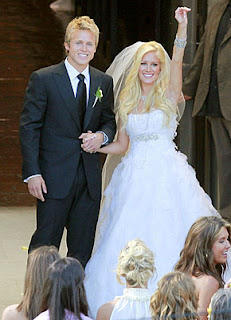
So I went back and re-read some of the parts of the stories that Alex pointed out to see if I was just jaded and completely missed the point. I wanted to try to read the marriages as positive, and see if the stories could end happily ever after. And I found out that, yes, you could read the stories and think “these characters had their problems, but they are going to work through them and be better off in the long run. I guess love conquers all.” There is enough left up to the reader in Lahiri’s stories to draw conclusions as different as “marriage is hell” and “marriage is bliss.” Personally, I think I will stick with my view that marriage is ugly, stressful, complicated, painful, and licenses should only be given to people who go through a screening process as rigorous as the FBI’s. Maybe (okay, likely) ((okay definitely)) it stems from my experience writing settlement demands for a divorce lawyer, but I firmly believe people like this should be forbidden to marry:
I would like to start by saying that all of the blog posts I read were very thought-provoking. Well played, Nightside Crowd.
One of the posts in particular, however, spurred me to post in response because it made a point about the stories that I didn’t quite catch. Alex’s post made a number of really cool points about the interconnectivity of Lahiri’s stories through the idea of marriage, and the cultural differences between Indian and American concepts of matrimony. Alex brought up the fact that in each of the four stories we read, marriage was a central issue, and that each story looked at different issues about marriage and from different perspectives. I think this is an excellent way of looking at this group of four stories in particular.
Alex’s conclusion that the marriages in Lahiri’s stories are “a necessary aspect of life, something needed in order to live happily and feel fulfilled” shocked me because in reading the stories, I saw a lot of negativity surrounding the marriages in IoM. There was a miscarriage that led to two people falling out of love, a secret infidelity that spawned a child, an implied incestuous+adulterous rape that spawned another child, and an arranged wedding between two strangers that turned out to be the healthiest marriage in the book. My opinion on reading the stories was that marriage was the cause of a lot of emotional strain and conflict, and in many cases can ruin people’s lives.
So I went back and re-read some of the parts of the stories that Alex pointed out to see if I was just jaded and completely missed the point. I wanted to try to read the marriages as positive, and see if the stories could end happily ever after. And I found out that, yes, you could read the stories and think “these characters had their problems, but they are going to work through them and be better off in the long run. I guess love conquers all.” There is enough left up to the reader in Lahiri’s stories to draw conclusions as different as “marriage is hell” and “marriage is bliss.” Personally, I think I will stick with my view that marriage is ugly, stressful, complicated, painful, and licenses should only be given to people who go through a screening process as rigorous as the FBI’s. Maybe (okay, likely) ((okay definitely)) it stems from my experience writing settlement demands for a divorce lawyer, but I firmly believe people like this should be forbidden to marry:
I guess the point I’m trying to fit into this rambling anti-marriage tirade is that Lahiri’s stories are so simple and yet so deep, that sentimentalists like Alex and cynics like me can both enjoy them. The beauty of Lahiri’s stories lies in their interpretation.
…of maladies.
Thursday, October 29, 2009
Language and Audience are related like Charlie Sheen and Emilio Estevez
OR: Read to the end for a neo-Nazi analogy…
We haven’t blogged in a couple of weeks, and now our first assignment after the layoff is a real head-scratcher: “What WOULD the works of Ha Jin and Conrad have been like if they hadn’t written in English?” It’s hard for me to project reactions that never happened, mostly because I like to be right and this is impossible to prove, but I think it’ll be interesting to think about the differences in how these works would have turned out if written in the authors’ native tongues.
For one thing (and I’m sure many if not all of us will mention this in some way) Ha Jin’s works would have been censored in China. No artist likes censorship, so I’m sure that was probably the biggest factor in his decision to write in English. However, since this is hypothetical anyway, had his works been written in Chinese AND been uncensored, they likely wouldn’t have gotten the adulation we English-speakers give them. The works help us question our cross-cultural relationships, and from instances in what we’ve read, the Chinese culture doesn’t embrace questioning, nor cross-cultural relationships. While I’m sure there would be many free-thinkers and scholars in China who would relate to and admire the stories, I’m fairly certain the other 1.3 billion people in China would either consider them smut or be indifferent. China is definitely becoming more accepting of changing points of view, but it still has a long way to go. Perhaps there will be more “free-thinking” literature written in Chinese in the future, but I think that right now China is still too used to the artistic oppression and isolation it has recently experienced to embrace stories like Ha Jin’s. In English, however, we can admire these works for their brilliant ability to show Western civilization not only what it’s like to live in China, but also how the Chinese think, and what they value. Reading these works of art is a great way to better know the Chinese, and to better understand how the Chinese view the West.
Conrad’s Heart of Darkness hits its audience better for being written in English as well. English speakers would have been far more struck by the effects of colonialism than Polish-speakers. Nothing against Poland, but I just don’t view it as a global imperial power. Conrad was obviously trying to shed some light on the brutalities a colonial system presents, and England was the preeminent colonial power, so it makes perfect sense for him to write in English. A Polish work by Jozef Korzeniowski 1) wouldn’t have reached an English audience concerned with its themes and 2) would have reached a Polish audience unconcerned with its themes.
In short, I think I can understand what Ha Jin was trying to say in his article: It’s important to match an audience with your work’s themes. You wouldn’t read a biochemistry lab report on golgi body sulfate metabolism to a class full of third-graders, and you wouldn’t read a pamphlet of neo-Nazi propaganda at a Synagogue (ta-da!). Once Ha Jin and Conrad both understood what issues were most important to them, they also realized that the English language would reach the audience most concerned with those issues.
We haven’t blogged in a couple of weeks, and now our first assignment after the layoff is a real head-scratcher: “What WOULD the works of Ha Jin and Conrad have been like if they hadn’t written in English?” It’s hard for me to project reactions that never happened, mostly because I like to be right and this is impossible to prove, but I think it’ll be interesting to think about the differences in how these works would have turned out if written in the authors’ native tongues.
For one thing (and I’m sure many if not all of us will mention this in some way) Ha Jin’s works would have been censored in China. No artist likes censorship, so I’m sure that was probably the biggest factor in his decision to write in English. However, since this is hypothetical anyway, had his works been written in Chinese AND been uncensored, they likely wouldn’t have gotten the adulation we English-speakers give them. The works help us question our cross-cultural relationships, and from instances in what we’ve read, the Chinese culture doesn’t embrace questioning, nor cross-cultural relationships. While I’m sure there would be many free-thinkers and scholars in China who would relate to and admire the stories, I’m fairly certain the other 1.3 billion people in China would either consider them smut or be indifferent. China is definitely becoming more accepting of changing points of view, but it still has a long way to go. Perhaps there will be more “free-thinking” literature written in Chinese in the future, but I think that right now China is still too used to the artistic oppression and isolation it has recently experienced to embrace stories like Ha Jin’s. In English, however, we can admire these works for their brilliant ability to show Western civilization not only what it’s like to live in China, but also how the Chinese think, and what they value. Reading these works of art is a great way to better know the Chinese, and to better understand how the Chinese view the West.
Conrad’s Heart of Darkness hits its audience better for being written in English as well. English speakers would have been far more struck by the effects of colonialism than Polish-speakers. Nothing against Poland, but I just don’t view it as a global imperial power. Conrad was obviously trying to shed some light on the brutalities a colonial system presents, and England was the preeminent colonial power, so it makes perfect sense for him to write in English. A Polish work by Jozef Korzeniowski 1) wouldn’t have reached an English audience concerned with its themes and 2) would have reached a Polish audience unconcerned with its themes.
In short, I think I can understand what Ha Jin was trying to say in his article: It’s important to match an audience with your work’s themes. You wouldn’t read a biochemistry lab report on golgi body sulfate metabolism to a class full of third-graders, and you wouldn’t read a pamphlet of neo-Nazi propaganda at a Synagogue (ta-da!). Once Ha Jin and Conrad both understood what issues were most important to them, they also realized that the English language would reach the audience most concerned with those issues.
Friday, October 9, 2009
Christophine as a Tangential Character
OR: The critical voice of WSS
The issue I found the most compelling in Spivak's essay is the characterization of Christophine. According to Spivak, "She [Christophine] cannot be contained by a novel which rewrites a canonical English text within the European novelistic tradition in the interest of the white Creole rather than the native." (246) In summary, since Christophine lies outside the conventions of European literature, even though she is a very important character, she exists, figuratively, outside of the realm of the novel. Thus, Spivak concludes, Christophine exists to be a critical voice. Though I find the logic in concluding that Christophine is not privy to the rules of the narrative (because she is an outlier to European literature) to be a bit stretched, I do like the idea of Christophine being a tool with which to display criticism.
Spivak cites Christophine's confrontation with Rochester as an example of this narrative criticism offered by Christophine. I admit that it is a very good example, and I also saw it mirrored in her advice to Antoinette. While Christophine confronts Rochester to display her concerns, Antoinette's criticism comes in the form of advice: "You ask me a hard thing, I tell you a hard thing, pack up and go." (65). Christophine's sound advice seems indeed to lie outside of European convention, as Antoinette dismisses the advice of "this ignorant, obstinate old negro woman, who is not certain if there is such a place as England." (67). In my opinion, and I think most of today's contemporary readers would agree, all parties would have ended up happier if Antoinette would have indeed left Rochester (especially Antoinette). In this sense, tangential Christophine has the most common sense, because she is not encumbered by 19th century European concepts of marriage and shame in letting that marriage end. Antoinette and Rochester, as Europeans, would rather manipulate each other and wallow in unhappiness than simply admit the marriage wasn't going to work and end it.
I would like to reword Spivak's argument to be a little more concrete: "since Christophine does not share the European values of the white characters in WSS, she is allowed to be critical of them. And since today's contemporary reader can relate to Christophine, Christophine can be seen as an external, critical voice in the novel." I certainly agree with this evaluation. Christophine's criticism of England, "Why you want to go to this cold, thief place?" (67), allows the reader to be critical as well.
Christophine is a very unique and useful character, in the sense that her criticisms within the novel contain instances of feminist, postcolonial, and uniquely West Indian ideals. I see Christophine as the most relatable character to today's WSS audience.
The issue I found the most compelling in Spivak's essay is the characterization of Christophine. According to Spivak, "She [Christophine] cannot be contained by a novel which rewrites a canonical English text within the European novelistic tradition in the interest of the white Creole rather than the native." (246) In summary, since Christophine lies outside the conventions of European literature, even though she is a very important character, she exists, figuratively, outside of the realm of the novel. Thus, Spivak concludes, Christophine exists to be a critical voice. Though I find the logic in concluding that Christophine is not privy to the rules of the narrative (because she is an outlier to European literature) to be a bit stretched, I do like the idea of Christophine being a tool with which to display criticism.
Spivak cites Christophine's confrontation with Rochester as an example of this narrative criticism offered by Christophine. I admit that it is a very good example, and I also saw it mirrored in her advice to Antoinette. While Christophine confronts Rochester to display her concerns, Antoinette's criticism comes in the form of advice: "You ask me a hard thing, I tell you a hard thing, pack up and go." (65). Christophine's sound advice seems indeed to lie outside of European convention, as Antoinette dismisses the advice of "this ignorant, obstinate old negro woman, who is not certain if there is such a place as England." (67). In my opinion, and I think most of today's contemporary readers would agree, all parties would have ended up happier if Antoinette would have indeed left Rochester (especially Antoinette). In this sense, tangential Christophine has the most common sense, because she is not encumbered by 19th century European concepts of marriage and shame in letting that marriage end. Antoinette and Rochester, as Europeans, would rather manipulate each other and wallow in unhappiness than simply admit the marriage wasn't going to work and end it.
I would like to reword Spivak's argument to be a little more concrete: "since Christophine does not share the European values of the white characters in WSS, she is allowed to be critical of them. And since today's contemporary reader can relate to Christophine, Christophine can be seen as an external, critical voice in the novel." I certainly agree with this evaluation. Christophine's criticism of England, "Why you want to go to this cold, thief place?" (67), allows the reader to be critical as well.
Christophine is a very unique and useful character, in the sense that her criticisms within the novel contain instances of feminist, postcolonial, and uniquely West Indian ideals. I see Christophine as the most relatable character to today's WSS audience.
Saturday, October 3, 2009
Caribbean and the Occult
OR: Voodoo, Zombies, Santeria, and the Wide Sargasso Sea
When most Westerners think of the Caribbean, we think of white sandy beaches, steel drums, picturesque sunsets, rum barrels, pirates, and maybe Usain Bolt. A fixture on “Travel Channel” and “E!’s Wild On” programming, the Caribbean islands are framed as an exotic getaway, not a place of mystery and witchcraft.
Before reading this novel, I had never heard the term “Sargasso Sea” to describe the Caribbean region. After our discussion in class, it became apparent that Rhys used “Sargasso Sea” instead of “Caribbean Ocean” specifically because she wanted to avoid the imagery presented above, and instead evoke mystery and darkness. The Sargasso Sea is strange, dangerous, and vast. A Gothic novel set in the Caribbean? It actually works quite well.
The Caribbean has always had this relaxing, fun-loving façade, but with that comes a history of un-orthodox religious practices and a belief in the supernatural. WorldWide Religious News, a website that compiles news stories from around the web and categorizes them by religion and world region, has a ton of interesting articles on the Occult in the Caribbean (see the bullet points on the right), and how it is still thriving to this day.
The relationship between Voodoo, zombies, Santeria, and the Caribbean is actually quite fascinating. At the essence of all three is the fear of losing one’s free will. This is poignant when you realize that they began as systems of beliefs for African-Caribbean slaves. A slave was always fearful of losing control of his or her soul. It makes sense to think that by taking people from Africa to the islands, then treating them as property and forcing them to work, Westerners created this idea that Caribbean slaves had a tenuous grasp on their own souls. And it is very sad.
This idea relates perfectly to Wide Sargasso Sea, because the reader is always mindful of Antoinette’s impending insanity. Antoinette, in effect, loses her ability to control herself, which is the foundation for the beliefs of the Caribbean occult. The fact that she is not a slave reinforces the idea that all of us have a tenuous grasp on our humanity, no matter what social position we find ourselves in.
When most Westerners think of the Caribbean, we think of white sandy beaches, steel drums, picturesque sunsets, rum barrels, pirates, and maybe Usain Bolt. A fixture on “Travel Channel” and “E!’s Wild On” programming, the Caribbean islands are framed as an exotic getaway, not a place of mystery and witchcraft.
Before reading this novel, I had never heard the term “Sargasso Sea” to describe the Caribbean region. After our discussion in class, it became apparent that Rhys used “Sargasso Sea” instead of “Caribbean Ocean” specifically because she wanted to avoid the imagery presented above, and instead evoke mystery and darkness. The Sargasso Sea is strange, dangerous, and vast. A Gothic novel set in the Caribbean? It actually works quite well.
The Caribbean has always had this relaxing, fun-loving façade, but with that comes a history of un-orthodox religious practices and a belief in the supernatural. WorldWide Religious News, a website that compiles news stories from around the web and categorizes them by religion and world region, has a ton of interesting articles on the Occult in the Caribbean (see the bullet points on the right), and how it is still thriving to this day.
The relationship between Voodoo, zombies, Santeria, and the Caribbean is actually quite fascinating. At the essence of all three is the fear of losing one’s free will. This is poignant when you realize that they began as systems of beliefs for African-Caribbean slaves. A slave was always fearful of losing control of his or her soul. It makes sense to think that by taking people from Africa to the islands, then treating them as property and forcing them to work, Westerners created this idea that Caribbean slaves had a tenuous grasp on their own souls. And it is very sad.
This idea relates perfectly to Wide Sargasso Sea, because the reader is always mindful of Antoinette’s impending insanity. Antoinette, in effect, loses her ability to control herself, which is the foundation for the beliefs of the Caribbean occult. The fact that she is not a slave reinforces the idea that all of us have a tenuous grasp on our humanity, no matter what social position we find ourselves in.
Friday, September 18, 2009
Twins are Fady
OR Numerous instances of twins offending the gods in African culture
I went a different way with this blog post (it is a free-for-all, after all) and decided to do a bit of a research project involving a cultural phenominon I rediscovered while reading Things Fall Apart. The issue where the Igbo people put newborn twins in baskets and leave them to die bothers me. I have heard mulitple instances in African cultures where twins are hated and treated in this manner, and I wanted to see why this happens.
I read The Poisonwood Bible in 2005 and thought it was a terrific book about Africa. It examines many of the same subjects we have been discussing in class (PoCo, the other, etc.) and was probably my introduction to thinking about African culture and what Europeans have done to affect it.
Also, I was lucky enough to travel to Madagascar a little less than a year ago, where I visited a friend of mine who lives there working for an landscaping company that specializes in biodiversity planting to prevent erosion. He has been there for over four years, so he speaks the language and could tell me a lot about the culture. I experienced a lot in my short three week stay, discovering many differences between Gasy (short for Malagasy, which is the descriptive term for someone or something from Madagascar) and American culture, as well as many more similarities. I basically discovered that the people of Madagascar are really just like Americans, the only differences lay in cultural quirks. For instance, the kids in Madagascar revere pro wrestling, and John Cena in particular. Also, the most requested songs on the radio are 80's hair band power ballads, like this song.
Then we read Things Fall Apart, and of course, many of the same issues I discovered in Poisonwood Bible and experienced in Madagascar were reiterated and peaked my interest. One of these strange cultural quirks that kept reoccurring was the fear of twins. As we read in Things Fall Apart, newborn twins are abandoned in the forest because they are believed to attract evil spirits and offend the Earth goddess. Similarly, in Poisonwood Bible, twins of the villagers are immediately killed, and the villagers also fear the two twin missionary daughters. Finally, in Madagascar, I learned that American volunteers and the Malagasy government are working hard to fight the local superstition that twins are "fady" or offensive to the gods.
"Fady" is a pretty broad term in Madagascar, meaning anything from "please" to "sorry" to "excuse me" to "taboo" to "leave me alone" etc. Literally translated, it means taboo, but I think a better description is "offensive to the gods". Wearing a hat in a cave, for instance, is fady, because the spirits who live in the cave demand respect. To bear twins is fady, and often the twins are separated, abandoned, or given up for adoption. This goes right along with how twins are treated in The Poisonwood Bible and Things Fall Apart, but it is pretty disturbing to me. I felt compelled to do some research on the place of twins in African culture and see if most of the continent had this reaction to multiple births.
I discovered that most cultures in Africa honor and respect twins. This is more of what I expected, since children are, in my experience, universally venerated and loved. You would think that having multiple children would be viewed as blessing, especially in farming cultures where more labor is needed. I was somewhat relieved that twins weren't hated all across the continent, but I still wanted to look in to possible explanations as to why twins were feared in the Igbo, Congo, and Malagasy cultures.
Apparently, the occurrence of multiple births is high in West Africa. According to one study, the occurrence of fraternal twins is three times higher in West Africa than it is in most of the rest of the world. One explanation is yams, another is genes, but either way it is definitely higher. It's amazing to me that two cultures in West Africa saw this same issue so differently: The Igbo (Okonkwo's people) killed their twins, while the Yoruba saw them as a blessing. This article examines the differences between how these two cultures with regards to the twin question, and poses a possible explanation: that multiple births are for animals, making twins inhuman.
It is so incredible to try to see how different cultures evolve solutions or explanations to natural phenomena. Some cultures venerate the same things that other cultures disparage. It makes you realize that we all have to take a step back and think about cultural differences before we judge a custom as primitive or inferior.
I went a different way with this blog post (it is a free-for-all, after all) and decided to do a bit of a research project involving a cultural phenominon I rediscovered while reading Things Fall Apart. The issue where the Igbo people put newborn twins in baskets and leave them to die bothers me. I have heard mulitple instances in African cultures where twins are hated and treated in this manner, and I wanted to see why this happens.
I read The Poisonwood Bible in 2005 and thought it was a terrific book about Africa. It examines many of the same subjects we have been discussing in class (PoCo, the other, etc.) and was probably my introduction to thinking about African culture and what Europeans have done to affect it.
Also, I was lucky enough to travel to Madagascar a little less than a year ago, where I visited a friend of mine who lives there working for an landscaping company that specializes in biodiversity planting to prevent erosion. He has been there for over four years, so he speaks the language and could tell me a lot about the culture. I experienced a lot in my short three week stay, discovering many differences between Gasy (short for Malagasy, which is the descriptive term for someone or something from Madagascar) and American culture, as well as many more similarities. I basically discovered that the people of Madagascar are really just like Americans, the only differences lay in cultural quirks. For instance, the kids in Madagascar revere pro wrestling, and John Cena in particular. Also, the most requested songs on the radio are 80's hair band power ballads, like this song.
Then we read Things Fall Apart, and of course, many of the same issues I discovered in Poisonwood Bible and experienced in Madagascar were reiterated and peaked my interest. One of these strange cultural quirks that kept reoccurring was the fear of twins. As we read in Things Fall Apart, newborn twins are abandoned in the forest because they are believed to attract evil spirits and offend the Earth goddess. Similarly, in Poisonwood Bible, twins of the villagers are immediately killed, and the villagers also fear the two twin missionary daughters. Finally, in Madagascar, I learned that American volunteers and the Malagasy government are working hard to fight the local superstition that twins are "fady" or offensive to the gods.
"Fady" is a pretty broad term in Madagascar, meaning anything from "please" to "sorry" to "excuse me" to "taboo" to "leave me alone" etc. Literally translated, it means taboo, but I think a better description is "offensive to the gods". Wearing a hat in a cave, for instance, is fady, because the spirits who live in the cave demand respect. To bear twins is fady, and often the twins are separated, abandoned, or given up for adoption. This goes right along with how twins are treated in The Poisonwood Bible and Things Fall Apart, but it is pretty disturbing to me. I felt compelled to do some research on the place of twins in African culture and see if most of the continent had this reaction to multiple births.
I discovered that most cultures in Africa honor and respect twins. This is more of what I expected, since children are, in my experience, universally venerated and loved. You would think that having multiple children would be viewed as blessing, especially in farming cultures where more labor is needed. I was somewhat relieved that twins weren't hated all across the continent, but I still wanted to look in to possible explanations as to why twins were feared in the Igbo, Congo, and Malagasy cultures.
Apparently, the occurrence of multiple births is high in West Africa. According to one study, the occurrence of fraternal twins is three times higher in West Africa than it is in most of the rest of the world. One explanation is yams, another is genes, but either way it is definitely higher. It's amazing to me that two cultures in West Africa saw this same issue so differently: The Igbo (Okonkwo's people) killed their twins, while the Yoruba saw them as a blessing. This article examines the differences between how these two cultures with regards to the twin question, and poses a possible explanation: that multiple births are for animals, making twins inhuman.
It is so incredible to try to see how different cultures evolve solutions or explanations to natural phenomena. Some cultures venerate the same things that other cultures disparage. It makes you realize that we all have to take a step back and think about cultural differences before we judge a custom as primitive or inferior.
Thursday, September 10, 2009
Why Academics Should Continue Reading Heart of Darkness
OR: English professors can't have been terribly wrong for the last century, right?
My argument for in support of the professors who have taught and continue to teach Heart of Darkness is simple: Heart of Darkness should certainly be taught in colleges across the world because it is an incredibly dense work of fiction.
In my previous blog, I basically agreed with Chinua Achebe that Heart of Darkness is a racist text. Achebe makes numerous valid points explaining this, and I made a couple similar, less adequate references in support of the same. But while Achebe goes so far as to say Joseph Conrad was a racist and that it is an abomination that we teach his text , I say that the work itself is great enough that we can learn from it despite the contextual shortcomings of its author. I will concede that Heart of Darkness is racist. So is Shakespeare’s Othello. But like Othello, Conrad’s work is dripping with complexity: it can be studied as a literary work, as a psychological work, as a sociological work, as a historical work, as a political work, etc. You can see that complexity simply by looking at the different titles of the essays in our anthology. We, as readers, have to put the work’s racism in context and be able to draw pertinent conclusions from it in spite of its primitive views about race. I look at it this way: in 200 years, when the entire civilized world is vegetarian, are future students going to be barred from reading works by every barbarian who ate meat? I sure hope not, and I don’t think that will be the case.
Achebe argues that we must eradicate this text (and presumably all racist texts) from the Western Literary Canon (volume 59) because the only way the West will stop taking advantage of other races is through “abandonment of unwholesome thoughts” (348). I argue that cutting great, complex works out of our curriculum doesn’t help us remove our unwholesome thoughts. In fact, I believe that education is the driving factor in learning from our unwholesome thoughts and moving past them.
In short, with the benefit of hindsight, I think that minds across the globe can benefit a great deal from analyzing Heart of Darkness . Hopefully, academia has moved past looking at the work as a literal description of black people. Hopefully, academia has learned to contextualize a work when it is studied. Hopefully, academia is skilled enough at analyzing a complex work that it can look through the ugliness it presents and formulate new thoughts about the present and the past.
I think the biggest flaw in Achebe’s essay comes at the conclusion, wherein he decides against ending on a positive note:
“In my original conception of this essay I had thought to conclude it nicely on an appropriately positive note in which I would suggest from my privileged position in African and Western cultures some advantages the West might derive from Africa once it rid its mind of old prejudices and began to look at Africa not through a haze of distortions and cheap mystifications but quite simply as a continent of people….But… I realized no easy optimism was possible” (348).
His pessimism was the downfall of his essay. Just like the West needs to have more faith in Africans’ concept for humanity, Achebe needs to have more faith in the West’s.
(NOTE: Here’s a link to the definition of literary canon. I think it’s a very useful term for literature connoisseurs to know. Plus I sat for about ten minutes trying to remember the term and typing things like “what is the term for a group of literary works that is commonly taught in college courses” into Google before I finally remembered it. I’m trying to prevent you from doing the same.)
My argument for in support of the professors who have taught and continue to teach Heart of Darkness is simple: Heart of Darkness should certainly be taught in colleges across the world because it is an incredibly dense work of fiction.
In my previous blog, I basically agreed with Chinua Achebe that Heart of Darkness is a racist text. Achebe makes numerous valid points explaining this, and I made a couple similar, less adequate references in support of the same. But while Achebe goes so far as to say Joseph Conrad was a racist and that it is an abomination that we teach his text , I say that the work itself is great enough that we can learn from it despite the contextual shortcomings of its author. I will concede that Heart of Darkness is racist. So is Shakespeare’s Othello. But like Othello, Conrad’s work is dripping with complexity: it can be studied as a literary work, as a psychological work, as a sociological work, as a historical work, as a political work, etc. You can see that complexity simply by looking at the different titles of the essays in our anthology. We, as readers, have to put the work’s racism in context and be able to draw pertinent conclusions from it in spite of its primitive views about race. I look at it this way: in 200 years, when the entire civilized world is vegetarian, are future students going to be barred from reading works by every barbarian who ate meat? I sure hope not, and I don’t think that will be the case.
Achebe argues that we must eradicate this text (and presumably all racist texts) from the Western Literary Canon (volume 59) because the only way the West will stop taking advantage of other races is through “abandonment of unwholesome thoughts” (348). I argue that cutting great, complex works out of our curriculum doesn’t help us remove our unwholesome thoughts. In fact, I believe that education is the driving factor in learning from our unwholesome thoughts and moving past them.
In short, with the benefit of hindsight, I think that minds across the globe can benefit a great deal from analyzing Heart of Darkness . Hopefully, academia has moved past looking at the work as a literal description of black people. Hopefully, academia has learned to contextualize a work when it is studied. Hopefully, academia is skilled enough at analyzing a complex work that it can look through the ugliness it presents and formulate new thoughts about the present and the past.
I think the biggest flaw in Achebe’s essay comes at the conclusion, wherein he decides against ending on a positive note:
“In my original conception of this essay I had thought to conclude it nicely on an appropriately positive note in which I would suggest from my privileged position in African and Western cultures some advantages the West might derive from Africa once it rid its mind of old prejudices and began to look at Africa not through a haze of distortions and cheap mystifications but quite simply as a continent of people….But… I realized no easy optimism was possible” (348).
His pessimism was the downfall of his essay. Just like the West needs to have more faith in Africans’ concept for humanity, Achebe needs to have more faith in the West’s.
(NOTE: Here’s a link to the definition of literary canon. I think it’s a very useful term for literature connoisseurs to know. Plus I sat for about ten minutes trying to remember the term and typing things like “what is the term for a group of literary works that is commonly taught in college courses” into Google before I finally remembered it. I’m trying to prevent you from doing the same.)
Friday, September 4, 2009
Marlow's "Level" of Racism
OR Weak, Medium, and Strong Racism in Heart of Darkness
Peter Edgerly Firchow's essay Race, Ethnicity, Nationality, Empire postulates that there are three levels of racism: weak racism, medium racisim, and strong racism. Weak racisim, according to Firchow, is "the belief that races (however defined, including ethnic and national groups) do exist and that they help to account for social phenomina." (p. 238) Medium racism, summarized, is the belief that some races are superior. Strong racism is the belief that the superior races are entitled to supress or eliminate the inferior races. (238)
Firchow goes on to argue that Marlow's attitude toward the Africans in Heart of Darkness is no more than weakly racist. Firchow states that "it does, however, imply a temporary cultural superiority."(238) I am going to look at evidence in the text to see if Marlow is indeed only lightly racist towards the Africans.
One instance where I can see Marlow's attitude as only a "temporary cultural superiority" is in his assertion that Britain was once as wild as Africa. "Imagine him [a Roman officer] here [Britain] - at the end of the world, a sea the colour of lead, a sky the colour of smoke, [....] Sandbanks, marshes, forests, savages, precious little to eat fit for a civilised man, nothing but Thames water to drink." (6). Here, Marlow does his best to compare Britain to Africa, and even states that the primitive Englishman was a savage. What is unclear to me, however, is Marlow's ideas about the modern (to him, in 1899) English race as opposed to the primitive English race under Roman rule. Does he consider the modern English to be the same race as the primitive English? Or have generations of Roman, Saxon, and Germanic blood, which entered the Anglo race throughout the centuries after the Romans first set foot on Britain, evolved the race into something different, something superior? I am not comfortable projecting a mindset into Marlow's character, but I am aware that one school of thought at the time was that the Anglo-Saxon race was a superior due to it's mix of the best qualities of Europeans, and it was "manifest destiny" that the Anglo-Saxon absorb all other races (this book). Did Marlow think this?
I have a tendency to think that Marlow is more of a "medium racist". I combed the work looking for instances of humanity, or even relatability between Marlow and the African characters. The closest I see is in instances where African people are suffering. "They were dying slowly - it was very clear. They were not enemies, they were not criminals [....] Then glancing down I saw a face near my hand. [...] slowly the eyelids rose and the sunken eyes looked up at me, enormous and vacant, a kind of blind, white flicker in the depths of the orbs which died out slowly."(17) He goes on to describe trying to give the sick, dying boy a piece of bread, but the boy is too weak to take it. I particularly think the closest instance to relating to the natives is when a man on his boat get stabbed with a spear and Marlow watches him die: "We two whites stood over him and his lustrous and inquiringglance enveloped us both. I declare it looked as though he would presently put to us some question in an understandable language, but he died without uttering a sound..." (46). I, however, think that these feelings of mercy are no more profound than when a man sees a dying or suffering animal. His feeding of the sick boy reminds me of feeding a stray dog. Marlow's reaction to the suffering, dying man with a spear in his side reminds me of a man who kills his first deer.
Ultimately, I believe that Marlow is a medium racist character. I think there is too much use of terms like "improved specimen" (36) "creatures" (17) and "fool-nigger" (45) for me to conclude that Marlow feels no superiority towards the Africans. And while he goes on for a paragraph or two about relating to an uneducated white ship mechanic, (29-30) I struggle to find an instance where Marlow socializes with a single African. His communication with them consists of barking orders, and his descriptions of them are always physical instead of mental or emotional. While Marlow does condemn the treatment of Africans in the story, I think that simply marks the borderline between "medium racism" and "strong racism", not "light racism" and "medium racism".
Peter Edgerly Firchow's essay Race, Ethnicity, Nationality, Empire postulates that there are three levels of racism: weak racism, medium racisim, and strong racism. Weak racisim, according to Firchow, is "the belief that races (however defined, including ethnic and national groups) do exist and that they help to account for social phenomina." (p. 238) Medium racism, summarized, is the belief that some races are superior. Strong racism is the belief that the superior races are entitled to supress or eliminate the inferior races. (238)
Firchow goes on to argue that Marlow's attitude toward the Africans in Heart of Darkness is no more than weakly racist. Firchow states that "it does, however, imply a temporary cultural superiority."(238) I am going to look at evidence in the text to see if Marlow is indeed only lightly racist towards the Africans.
One instance where I can see Marlow's attitude as only a "temporary cultural superiority" is in his assertion that Britain was once as wild as Africa. "Imagine him [a Roman officer] here [Britain] - at the end of the world, a sea the colour of lead, a sky the colour of smoke, [....] Sandbanks, marshes, forests, savages, precious little to eat fit for a civilised man, nothing but Thames water to drink." (6). Here, Marlow does his best to compare Britain to Africa, and even states that the primitive Englishman was a savage. What is unclear to me, however, is Marlow's ideas about the modern (to him, in 1899) English race as opposed to the primitive English race under Roman rule. Does he consider the modern English to be the same race as the primitive English? Or have generations of Roman, Saxon, and Germanic blood, which entered the Anglo race throughout the centuries after the Romans first set foot on Britain, evolved the race into something different, something superior? I am not comfortable projecting a mindset into Marlow's character, but I am aware that one school of thought at the time was that the Anglo-Saxon race was a superior due to it's mix of the best qualities of Europeans, and it was "manifest destiny" that the Anglo-Saxon absorb all other races (this book). Did Marlow think this?
I have a tendency to think that Marlow is more of a "medium racist". I combed the work looking for instances of humanity, or even relatability between Marlow and the African characters. The closest I see is in instances where African people are suffering. "They were dying slowly - it was very clear. They were not enemies, they were not criminals [....] Then glancing down I saw a face near my hand. [...] slowly the eyelids rose and the sunken eyes looked up at me, enormous and vacant, a kind of blind, white flicker in the depths of the orbs which died out slowly."(17) He goes on to describe trying to give the sick, dying boy a piece of bread, but the boy is too weak to take it. I particularly think the closest instance to relating to the natives is when a man on his boat get stabbed with a spear and Marlow watches him die: "We two whites stood over him and his lustrous and inquiringglance enveloped us both. I declare it looked as though he would presently put to us some question in an understandable language, but he died without uttering a sound..." (46). I, however, think that these feelings of mercy are no more profound than when a man sees a dying or suffering animal. His feeding of the sick boy reminds me of feeding a stray dog. Marlow's reaction to the suffering, dying man with a spear in his side reminds me of a man who kills his first deer.
Ultimately, I believe that Marlow is a medium racist character. I think there is too much use of terms like "improved specimen" (36) "creatures" (17) and "fool-nigger" (45) for me to conclude that Marlow feels no superiority towards the Africans. And while he goes on for a paragraph or two about relating to an uneducated white ship mechanic, (29-30) I struggle to find an instance where Marlow socializes with a single African. His communication with them consists of barking orders, and his descriptions of them are always physical instead of mental or emotional. While Marlow does condemn the treatment of Africans in the story, I think that simply marks the borderline between "medium racism" and "strong racism", not "light racism" and "medium racism".
Tuesday, September 1, 2009
Heart of Darkness and Apocalypse Now
This has been written about in college courses ad naseum, but Francis Ford Coppola does some really cool things with Heart of Darkness in his Vietnam film adaptation Apocalypse Now. If you have some spare time, compare this scene with the paragraph starting at the bottom of page 44 and ending at the bottom of page 45:
(Sorry about the Italian subtitles. Also there's some strong language.)
And I love Marlon Brando's portrayal of Kurtz. Compare this scene with the two paragraphs at the bottom of page 61 through the top of page 62, starting with "At this moment I heard Kurtz's deep voice..." (Keep in mind that the manager and Marlow are combined into Martin Sheen's character of Willard):
(Again, strong language)
Coppola does some fantastic things with lighting and music to set the mood for both of these scenes, really capturing the fear and intrigue of Africa/Veitnam and Kurtz. If you get a chance to watch Apocalypse Now sometime soon, I highly recommend it, and if you watch it, make sure you get the "redux" version. Seeing the film and reading the story in a short time span will do a lot to enhance both experiences. There is also a documentary about making Apocalypse Now called Hearts of Darkness: a Filmmaker's Apocalypse which is also insanely interesting, but not as pertinent to this class.
(Sorry about the Italian subtitles. Also there's some strong language.)
And I love Marlon Brando's portrayal of Kurtz. Compare this scene with the two paragraphs at the bottom of page 61 through the top of page 62, starting with "At this moment I heard Kurtz's deep voice..." (Keep in mind that the manager and Marlow are combined into Martin Sheen's character of Willard):
(Again, strong language)
Coppola does some fantastic things with lighting and music to set the mood for both of these scenes, really capturing the fear and intrigue of Africa/Veitnam and Kurtz. If you get a chance to watch Apocalypse Now sometime soon, I highly recommend it, and if you watch it, make sure you get the "redux" version. Seeing the film and reading the story in a short time span will do a lot to enhance both experiences. There is also a documentary about making Apocalypse Now called Hearts of Darkness: a Filmmaker's Apocalypse which is also insanely interesting, but not as pertinent to this class.
Subscribe to:
Posts (Atom)